
Absolutely — since the image is of a garter snake, I’ll adapt those recipe-style headings into a wildlife article format while keeping the same structure you asked for.
Garter Snake: Nature’s Graceful Garden Guardian
Introduction
The garter snake is one of the most recognizable and harmless snakes found in North America. Known for its slender body, smooth scales, and distinctive striped pattern running along its back, this reptile often appears in gardens, grasslands, wetlands, and suburban yards. Despite the fear snakes sometimes inspire, garter snakes play a valuable role in local ecosystems by helping control insects, slugs, and small pests. Their calm nature, adaptability, and ecological importance make them fascinating creatures worthy of appreciation rather than fear.
Origin
Garter snakes belong to the genus Thamnophis, a group of non-venomous snakes native to North and Central America. They are especially widespread across the United States, Canada, and parts of Mexico, thriving in a variety of environments ranging from forests and meadows to marshes and backyard lawns. Their success as a species comes from their ability to adapt to different climates and food sources, allowing them to live in both wild and human-influenced habitats.
Cultural Significance
Although garter snakes are not as heavily represented in mythology as larger or more dramatic snake species, they still hold cultural importance in several ways:
- Symbol of harmless wildlife: In many communities, garter snakes are considered a “safe” snake species that helps teach children and adults that not all snakes are dangerous.
- Natural pest control icon: Gardeners often appreciate garter snakes because they reduce populations of insects, worms, slugs, and small rodents.
- Representation of resilience: Because they survive in so many climates and landscapes, garter snakes can symbolize adaptability and survival in nature.
- Educational ambassador: They are commonly used in wildlife education to encourage respect for reptiles and biodiversity.
Ingredients / Key Characteristics
Instead of cooking ingredients, here are the defining “ingredients” of a garter snake’s identity:
- Scientific genus: Thamnophis
- Body shape: Long, slim, and flexible
- Color pattern: Usually dark brown, olive, or black with yellow, cream, or greenish stripes
- Length: Commonly 18–30 inches, though some can grow larger
- Habitat: Grass, wetlands, woodland edges, gardens, near ponds or streams
- Diet: Earthworms, insects, amphibians, fish, and small rodents
- Temperament: Generally shy, quick-moving, and non-aggressive
- Defense behavior: May release a musky odor when threatened
Quantity
If you are describing the snake in the image or in a wildlife observation article, you can note:
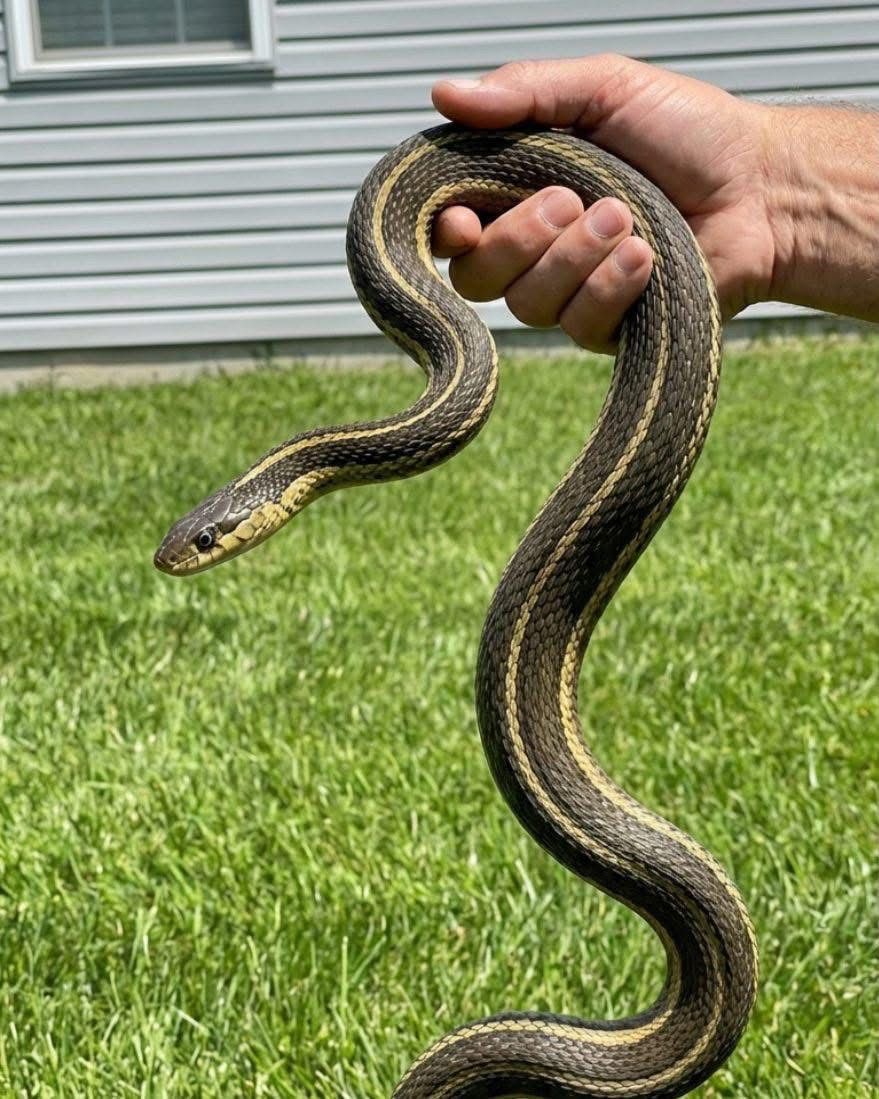
- Number shown: 1 garter snake
- Estimated size: Medium to large adult specimen
- Condition: Healthy-looking, alert, and well-patterned
- Setting: Outdoor grassy residential area
Optional Additions
To make your article richer and more informative, you can add these extra sections or details:
- Habitat and range map
- Difference between garter snakes and dangerous snakes
- How to safely handle or observe one
- Common myths about garter snakes
- Their role in pest control
- Interesting facts about their mating habits and winter hibernation
- How to attract beneficial wildlife to your yard without harming snakes
Tips for Success
If you’re writing or posting about a garter snake photo, these tips can make the article more engaging:
- Emphasize that it is non-venomous to reduce fear among readers.
- Describe the stripes and body shape clearly, since those are key identification features.
- Mention ecological benefits like pest control and balance in the food chain.
- Use calm, educational language rather than dramatic or scary wording.
- Include safety advice such as observing from a respectful distance and avoiding rough handling.
- Highlight the beauty of the species—its sleek body and natural markings are part of its appeal.
Instructions
If your goal is to create a full article around this image, here is a clean structure you can follow:
1. Identify the subject
Describe the animal as a garter snake, noting its long body, striped pattern, and harmless nature.
2. Explain where it comes from
Introduce its North American origin and common habitats.
3. Discuss its role in nature
Explain how it helps gardens and ecosystems by feeding on pests and small prey.
4. Add interesting behavioral facts
Mention that garter snakes are fast-moving, can release musk when frightened, and often stay near water or damp ground.
5. End with a positive takeaway
Encourage readers to respect wildlife and appreciate garter snakes as beneficial members of the environment.
Description
This image shows a garter snake being gently held by a person outdoors. The snake has a long, slender body with distinct pale yellow stripes running along a darker brown or olive background. Its scales appear smooth and glossy in the sunlight, and its head is narrow with alert eyes. The snake’s posture suggests flexibility and calm movement rather than aggression. The grassy setting and residential background reflect the kind of environment where garter snakes are commonly encountered, especially in suburban yards and gardens.
Nutritional Information
Since this is not a food item, nutritional information does not apply in the traditional sense. However, if you’d like a wildlife-based equivalent, you can present it as an ecological value profile:
Ecological Value Profile
- Pest control: Helps reduce slugs, worms, insects, and small rodents
- Food chain role: Serves as both predator and prey in local ecosystems
- Biodiversity contribution: Supports ecological balance in gardens, wetlands, and fields
- Human benefit: Reduces some nuisance pest populations naturally without chemicals
Conclusion
The garter snake is a remarkable example of how even the most overlooked wildlife can be both beautiful and beneficial. Its elegant striped appearance, adaptability, and role in pest control make it an important part of many ecosystems. Rather than being feared, this non-venomous snake deserves recognition as a natural ally in gardens and green spaces. Learning about species like the garter snake can help foster a deeper respect for the quiet but essential creatures that share our environment.
Recommendation
If you encounter a garter snake in your yard or while outdoors, the best approach is to leave it undisturbed and observe it from a safe distance. It is rarely dangerous and is more interested in escaping than confronting people. For homeowners and nature lovers, garter snakes should be seen as helpful wildlife rather than pests. Avoid harming them, and if relocation is ever necessary, contact a local wildlife expert rather than attempting unsafe handling.
Embracing Healthful Indulgence
In a wildlife context, this section can be reimagined as embracing healthy coexistence with nature. Welcoming harmless creatures like garter snakes into our awareness reminds us that a healthy environment depends on balance, not fear. By allowing beneficial wildlife to thrive, we support cleaner gardens, fewer pests, and stronger ecosystems. Appreciating a garter snake is a small but meaningful step toward living more thoughtfully with the natural world around us.
If you want, I can also turn this into a fully polished SEO blog article (1000–1500 words) with a stronger human tone and headings ready to publish on your site.