
Introduction
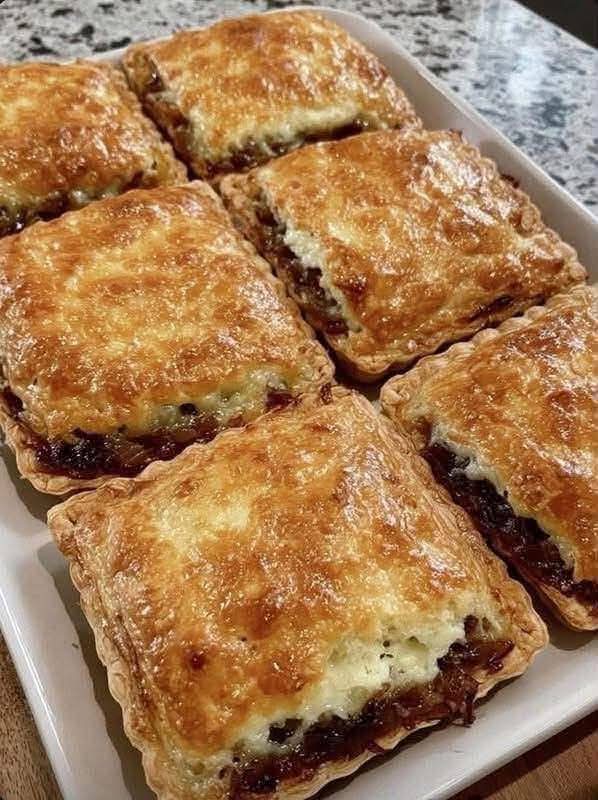
Warm Church-Supper Upside-Down Onion Tarts combine deeply caramelized onions with crisp, buttery puff pastry in an appetizer that looks elegant but remains surprisingly easy to prepare.
The onions are slowly cooked until tender, sweet, and golden, then portioned directly onto a parchment-lined baking sheet. Each portion is covered with chilled puff pastry and baked upside down. Once flipped, the flaky pastry becomes the base while the glossy caramelized onions create a beautiful topping.
These individual caramelized onion tarts are ideal for church suppers, holiday entertaining, brunch, family dinners, and neighborhood potlucks. They can be served warm or at room temperature, making them an especially practical make-ahead appetizer.
Recipe Overview
| Detail | Information |
|---|---|
| Preparation time | 15 minutes |
| Onion-cooking time | 30–35 minutes |
| Baking time | 18–22 minutes |
| Total time | Approximately 65–75 minutes |
| Servings | 6 individual tarts |
| Difficulty | Easy |
| Oven temperature | 400°F (200°C) |
| Best served | Warm or at room temperature |
| Recipe type | Appetizer, brunch or light lunch |
| Dietary information | Vegetarian |
Why You’ll Love This Recipe
These upside-down onion tarts transform inexpensive pantry ingredients into a polished appetizer suitable for holidays, potlucks, and casual family meals.
Frozen puff pastry provides a light, bakery-style crust without requiring homemade dough. It saves preparation time while still producing crisp, golden layers.
Slowly caramelizing the onions develops their natural sweetness and gives the finished tarts a rich, savory flavor. A small amount of brown sugar helps the onions become glossy without making the recipe taste like dessert.
The individual size makes the tarts easy to portion and serve. Guests can pick up a complete tart without cutting slices from a larger pastry.
This recipe also works well for meal planning and entertaining because the caramelized onions can be prepared in advance. Assemble and bake the tarts shortly before serving for the best texture.
Ingredients
For the Caramelized Onions
| Ingredient | Quantity | Purpose |
|---|---|---|
| Large yellow onions | 3, thinly sliced | Creates the sweet, savory topping |
| Extra-virgin olive oil | 1 tablespoon | Prevents sticking and encourages browning |
| Unsalted butter | 1 tablespoon | Adds richness and flavor |
| Light brown sugar | 2 teaspoons | Helps create a glossy caramelized finish |
| Kosher salt | ¾ teaspoon | Seasons the onions and draws out moisture |
| Black pepper | ¼ teaspoon | Adds gentle warmth |
| Fresh thyme leaves | 1 teaspoon | Adds an aromatic herbal flavor |
For the Pastry
| Ingredient | Quantity | Purpose |
|---|---|---|
| Frozen puff pastry | 1 sheet, about 8–9 ounces | Forms the crisp, flaky base |
| All-purpose flour | 1 tablespoon, as needed | Prevents the pastry from sticking while rolling |
| Large egg | 1 | Creates a glossy golden finish |
| Water | 1 teaspoon | Thins the egg wash |
| Fresh thyme | As needed | Optional garnish |
Step-by-Step Instructions
Step 1: Thaw the Puff Pastry
Thaw the puff pastry according to its package directions. It should be flexible enough to unfold without cracking but still feel cold.
Refrigerate the pastry while preparing the onions. Keeping the butter layers inside the dough cold is essential for a tall, flaky crust.
Step 2: Slice the Onions
Peel the onions, cut them in half, and slice them into thin, even half-moons.
Uniform slices cook at approximately the same rate, preventing some pieces from burning before the others soften.
Step 3: Begin Cooking the Onions
Heat the olive oil and butter in a large, heavy skillet over medium heat.
When the butter has melted, add the sliced onions and salt. Stir until all the onions are lightly coated.
Cook for about 5 minutes, stirring occasionally, until the onions begin to soften.
Step 4: Caramelize the Onions Slowly
Reduce the heat to medium-low and continue cooking for 25–30 minutes.
Stir every few minutes and scrape the bottom of the skillet with a wooden spoon. If the onions begin sticking before they are tender, add 1 tablespoon of water and reduce the heat slightly.
The onions are ready when they are soft, reduced in volume, and evenly golden brown. Caramelization requires patience; high heat will burn the onions instead of developing their natural sweetness.
Step 5: Finish the Filling
Add the brown sugar, black pepper, and thyme.
Cook for another 2–3 minutes, stirring frequently, until the onions are glossy and deeply golden. Taste and adjust the seasoning if necessary.
Remove the skillet from the heat and allow the onions to cool for approximately 10 minutes. Extremely hot filling can soften the puff pastry before it reaches the oven.
Step 6: Prepare the Baking Sheet
Preheat the oven to 400°F (200°C).
Line a large, light-colored baking sheet with parchment paper. Avoid wax paper because it is not designed for oven use.
Divide the caramelized onions into six equal mounds on the prepared sheet, leaving at least 2 inches between them. Shape each mound into a compact rectangle or circle approximately 3 inches wide.
Step 7: Cut the Puff Pastry
Place the cold puff pastry on a lightly floured work surface.
Gently roll it just enough to smooth the fold lines. Cut the sheet into six equal rectangles.
Each pastry piece should be slightly larger than the onion mound it will cover.
Step 8: Assemble the Upside-Down Tarts
Place one pastry rectangle over each portion of onions.
Gently press the edges toward the parchment to enclose the onions without flattening the center. Prick the top of each pastry once with a fork so excess steam can escape.
Whisk the egg with 1 teaspoon of water. Brush a thin, even layer of egg wash over the exposed pastry.
Step 9: Bake
Bake for 18–22 minutes, or until the puff pastry is tall, crisp, and deeply golden.
If your oven browns unevenly, rotate the baking sheet after approximately 12 minutes.
The pastry should not look pale or doughy around the edges.
Step 10: Flip the Tarts
Let the tarts rest on the baking sheet for 3–5 minutes. Do not allow them to cool completely, or the caramelized onions may begin sticking to the parchment.
Slide a thin spatula underneath each tart and carefully turn it over so the pastry is on the bottom and the onions are on top.
Return any loose onion pieces to the top with a spoon. Garnish with fresh thyme and serve warm.
Best Tips
Keep the puff pastry refrigerated until you are ready to cut and assemble it. Cold pastry produces better layers because its butter creates steam as it melts in the hot oven.
Use a wide skillet when caramelizing the onions. A crowded pan traps steam and slows browning, while a wide cooking surface allows moisture to evaporate efficiently.
Cook the onions over moderate heat. Turning up the heat may shorten the cooking time, but it can leave the onions bitter, scorched, or undercooked in the center.
Allow the onion mixture to cool slightly before assembling the tarts. Warm onions are fine, but steaming-hot filling can melt the pastry’s butter prematurely.
Use a light-colored baking sheet if possible. Dark bakeware absorbs more heat and may brown the bottom of the onions before the pastry is fully baked.
Flip the tarts while they are still warm. Waiting too long allows the caramelized sugar and onion juices to set against the parchment.
Best Ingredient Options
Yellow onions provide the best balance of sweetness and savory flavor. Sweet onions, such as Vidalia onions, create a milder result but may release more moisture and require additional cooking time.
Choose an all-butter puff pastry when available for the richest flavor. Standard supermarket puff pastry also works well and is often more affordable for large gatherings.
Fresh thyme complements caramelized onions without overpowering them. Rosemary can be substituted, but use it sparingly because its flavor is much stronger.
Unsalted butter gives you greater control over the seasoning. If using salted butter, reduce the added kosher salt slightly and taste the onions before assembling the tarts.
Brown sugar helps the topping become glossy, but it should not replace proper caramelization. The onions still need slow cooking to develop their deepest flavor.
Recipe Variations
For cheesy onion tarts, place a small amount of shredded Gruyère, Swiss cheese, or sharp white cheddar over each onion mound before covering it with pastry. Use only a modest amount so melted cheese does not spread excessively.
For goat cheese tarts, add crumbled goat cheese after flipping the baked pastries. Its tangy flavor balances the sweetness of the onions beautifully.
For bacon and onion tarts, mix a few tablespoons of cooked, finely chopped bacon into the caramelized onions. Reduce the salt slightly because bacon already contains considerable sodium.
For mushroom tarts, sauté finely sliced mushrooms separately until their liquid has evaporated. Combine them with the finished onions before assembling the pastries.
For an apple-onion variation, cook thinly sliced apple with the onions during the final 8–10 minutes. A tart apple such as Granny Smith provides the best sweet-savory contrast.
For a balsamic version, stir 1 teaspoon of balsamic vinegar into the onions during the final minute of cooking. The acidity brightens the rich butter and puff pastry.
What to Serve With
Serve these warm onion tarts with a crisp green salad dressed with lemon vinaigrette. The acidity of the dressing balances the rich pastry and naturally sweet onions.
For brunch, pair them with softly scrambled eggs, fresh fruit, and roasted breakfast potatoes.
At dinner, the tarts complement roasted chicken, turkey, pork tenderloin, or grilled steak. They can also turn a bowl of tomato, mushroom, or creamy potato soup into a complete meal.
For a church supper or holiday appetizer table, arrange the tarts with a cheese board, fresh vegetables, savory dips, and sparkling lemonade or iced tea.
Make-Ahead Instructions
The onions can be caramelized up to three days in advance.
Allow them to cool completely, transfer them to an airtight container, and refrigerate. When ready to bake, let the onions stand at room temperature for about 15 minutes so they are easier to portion.
The unbaked tarts may be assembled up to two hours ahead. Cover the baking sheet loosely and refrigerate it. Brush the pastry with egg wash immediately before baking.
Do not leave assembled puff pastry at room temperature for an extended period. The dough needs to remain cold to create crisp, flaky layers.
Storage
Allow leftover tarts to cool completely before transferring them to an airtight container.
Refrigerate for up to three days. Place parchment paper between layers to prevent the onion topping from sticking to another tart.
Puff pastry gradually softens in the refrigerator, so the tarts are best when reheated in an oven or air fryer.
Reheating
Preheat the oven to 350°F (175°C).
Place the tarts on a parchment-lined baking sheet and heat for 8–10 minutes, or until the pastry is crisp and the onion topping is hot.
An air fryer can also be used at 325°F (165°C) for approximately 4–6 minutes. Check early because air-fryer models vary considerably.
Microwaving is convenient but not recommended when texture matters. It heats the onions effectively but makes the pastry soft and chewy.
Freezing
The baked tarts can be frozen for up to two months.
Arrange the cooled tarts in a single layer on a baking sheet and freeze until firm. Transfer them to a freezer-safe container with parchment between the layers.
Reheat directly from frozen in a 350°F (175°C) oven for approximately 15–18 minutes. Make sure the center is thoroughly heated before serving.
For the best pastry texture, avoid freezing and thawing the same tart more than once.
Common Mistakes to Avoid
Cooking the onions over high heat is the most common mistake. The outside may darken quickly, but the inside will remain sharp and firm. Slow cooking produces the soft texture and balanced sweetness this recipe needs.
Using warm or overly soft puff pastry prevents it from rising properly. If the pastry becomes sticky while you work, refrigerate it for 10–15 minutes before continuing.
Making the onion mounds too large can leave the center of the pastry underbaked. Keep the portions compact and leave enough room for hot air to circulate between the tarts.
Adding too much sugar may cause the onion topping to burn or become candy-like. Two teaspoons are enough to enhance browning without overwhelming the savory flavor.
Flipping the tarts immediately can cause the hot topping to slide off. Waiting 3–5 minutes allows the pastry to firm up while keeping the onions easy to release.
Leaving the tarts on the baking sheet until completely cold may cause the caramelized onions to stick. Turn them over while they are still comfortably warm.
Nutrition Estimate
The following values are approximate and are calculated for one tart when the recipe makes six. Exact nutrition will vary according to the puff pastry brand and ingredient substitutions.
| Nutrient | Estimated amount per tart |
|---|---|
| Calories | 290 kcal |
| Protein | 4 g |
| Total carbohydrates | 31 g |
| Dietary fiber | 2 g |
| Total sugars | 7 g |
| Total fat | 18 g |
| Saturated fat | 6 g |
| Sodium | 250 mg |
| Cholesterol | 38 mg |
Frequently Asked Questions
Why are these called upside-down onion tarts?
The filling is placed on the baking sheet first and covered with puff pastry. After baking, each tart is turned over so the pastry becomes the base and the caramelized onions appear on top.
Can I use frozen puff pastry?
Yes. Frozen puff pastry is ideal for this recipe. Thaw it according to the package instructions, but keep it cold until assembly.
Can I use red onions?
Yes. Red onions produce a slightly sharper flavor and a darker color. Cook them slowly in the same way as yellow onions.
Can I make one large tart instead of individual tarts?
Yes. Shape the onions into one even layer and cover them with a full sheet of puff pastry. Bake until deeply golden, then rest for 5 minutes before carefully inverting the tart onto a large serving board.
Why didn’t my puff pastry rise?
The pastry may have become too warm, or the oven may not have been fully preheated. Heavy egg wash running down the cut edges can also seal the layers and restrict their rise.
Do I have to add brown sugar?
No. Properly caramelized onions develop natural sweetness without added sugar. The small quantity in this recipe simply supports browning and creates a glossy finish.
Can I add cheese?
Yes. Gruyère, Swiss cheese, Parmesan, sharp cheddar, and goat cheese all complement caramelized onions. Avoid adding too much, as excess cheese can leak from underneath the pastry.
Can these tarts be served at room temperature?
Yes. They remain flavorful at room temperature, which makes them convenient for potlucks and buffet-style gatherings. For food quality and safety, do not leave them unrefrigerated for more than two hours.
How do I keep the bottom crisp?
Bake the pastry until it is deeply golden, avoid overly wet fillings, and serve the tarts soon after flipping. Reheat leftovers in the oven instead of the microwave.
Final Thoughts
Warm Church-Supper Upside-Down Onion Tarts prove that simple ingredients can create a memorable appetizer.
Sweet caramelized onions, fragrant thyme, and crisp puff pastry deliver a satisfying combination of savory flavor and contrasting textures. The individual presentation looks impressive while remaining manageable for beginner cooks.
Because the onions can be prepared ahead, these tarts are practical for holiday entertaining, brunch, family dinners, and potluck meal planning. Serve them warm with salad or soup, or add them to an appetizer table for an easy puff pastry recipe guests can enjoy without utensils.