

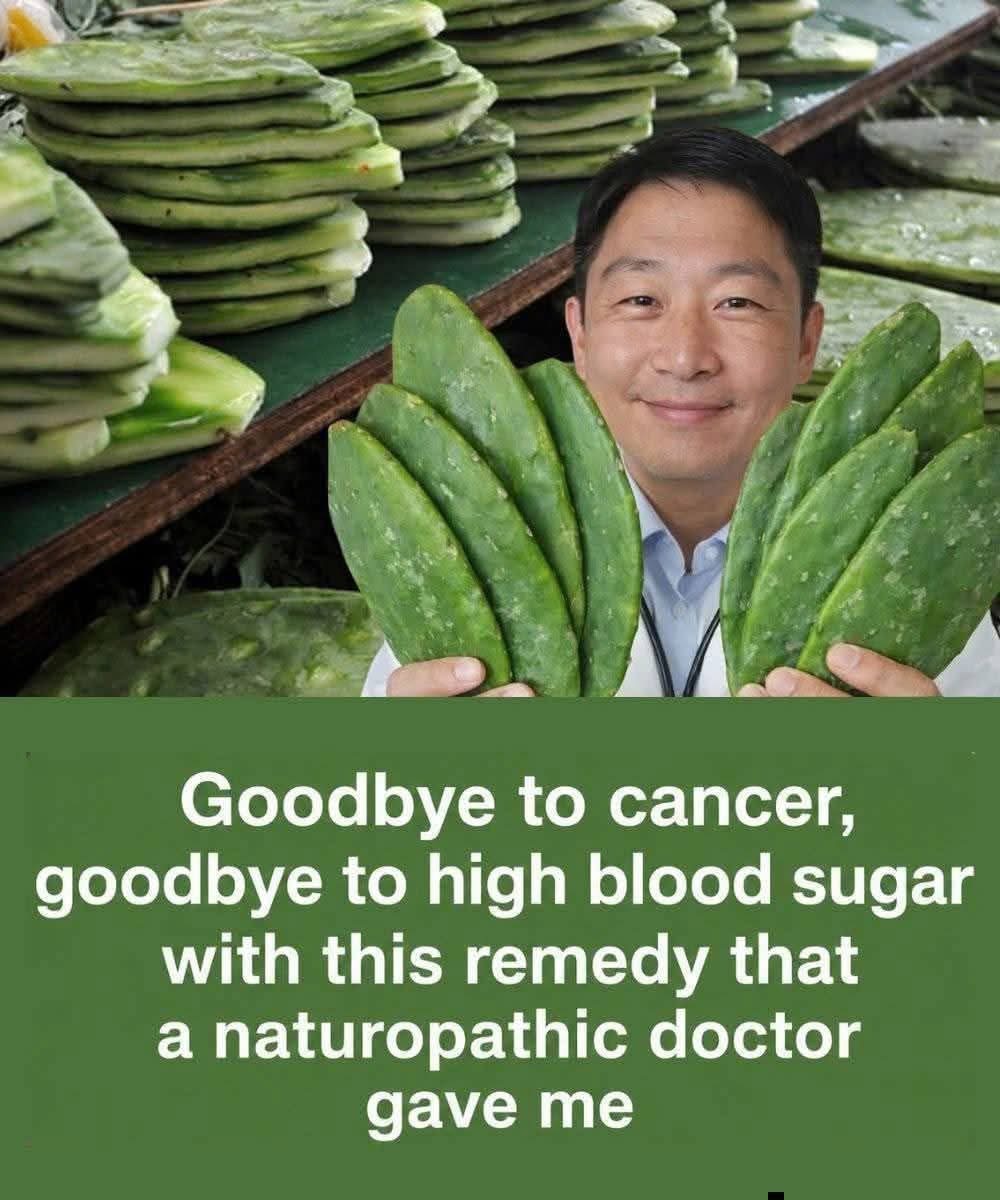
Nopales (prickly pear cactus pads) are the edible, flattened green stems shown in the image. They are a traditional food (and folk remedy) rather than a proven cure for cancer or high blood sugar. While some studies explore modest effects on blood glucose and antioxidants, claims of “goodbye to cancer” or eliminating high blood sugar are not supported by rigorous clinical evidence. Consult a physician before using them for any medical purpose, especially if you have diabetes, cancer, or take medications.
Introduction
Nopales are the tender young pads of the prickly pear cactus (Opuntia species). Mild, slightly tart, and mucilaginous when cooked, they have long been eaten as a vegetable in arid regions. The image shows cleaned, prepared pads ready for cooking or juicing—the form commonly used in everyday Mexican and Southwestern cooking and in traditional wellness practices.
Origin and Cultural Significance
Native to the Americas (especially Mexico and the southwestern United States), prickly pear cacti were domesticated thousands of years ago. Nopales appear in pre-Columbian diets and remain central to Mexican cuisine—grilled, stewed, scrambled with eggs, or added to salads and tacos. In folk medicine across Mexico and the U.S. Southwest they have been used for digestion, hydration, and blood-sugar support. The fruit (tuna) and pads also hold cultural and symbolic importance in Mexican identity (the eagle-and-cactus motif on the national flag).
Ingredients Quantity
For a basic cooked nopal side dish or simple “remedy-style” preparation serving 2–4:
- 4–6 medium fresh nopal pads (about 400–500 g / 14–18 oz after cleaning)
- ½–1 tsp salt (or to taste)
- Water for boiling or steaming
- Optional light seasoning: 1–2 cloves garlic, a squeeze of lime, or a pinch of cumin
Optional Additions
- Onion, tomato, cilantro, or jalapeño for a classic nopales a la mexicana
- Eggs (for nopales con huevo)
- Olive oil or avocado for a simple sauté
- Lemon/lime juice and a touch of honey or stevia if making a blended drink
- Spices such as oregano, chili powder, or black pepper
Tips for Success
- Choose young, bright-green pads that are firm and free of soft spots.
- Wear gloves or use tongs—spines and glochids (tiny irritating hairs) must be completely removed.
- Rinse thoroughly after de-spining; a quick boil or steam reduces the natural mucilage if you prefer a less slippery texture.
- Do not overcook; pads should stay slightly firm and bright green.
- Fresh pads keep a few days refrigerated; cooked leftovers keep 2–3 days.
- Start with small amounts if you are new to them—some people experience mild digestive effects from the fiber.
Instructions
- Clean the pads: Hold each pad with tongs. Scrape or cut off all spines and the thin outer edge with a sharp knife. Rinse under cold water and pat dry.
- Cut into strips or small squares (about 1–2 cm / ½ inch).
- Cook:
- Boil method – Place in salted boiling water 5–10 minutes until tender but still bright. Drain well.
- Sauté method – Heat a little oil, add optional garlic/onion, then the nopales; cook 8–12 minutes, stirring, until the liquid reduces and they are tender.
- Grill or roast for a smoky flavor.
- Season simply with salt, lime, and herbs, or incorporate into eggs, salads, tacos, or stews.
- For a blended preparation sometimes promoted in wellness circles: briefly cook or steam, then blend with a little water, lime, and optional mild sweetener; strain if desired. Consume in moderation.
Description
Raw or lightly cooked nopales have a mild, green-vegetable flavor reminiscent of green beans or okra, with a pleasant tartness and a slippery, mucilaginous texture that softens with cooking. Properly prepared pads are vibrant green, slightly crisp-tender, and absorb seasonings well.
Nutritional Information
(Approximate values per 100 g cooked nopales; actual figures vary)
- Calories: ~15–20 kcal
- Carbohydrate: ~3–4 g (mostly fiber)
- Fiber: ~2–3 g
- Protein: ~1–1.5 g
- Fat: negligible
- Notable micronutrients: vitamin C, magnesium, calcium, potassium, and various polyphenols/antioxidants.
They are low in calories and relatively high in soluble fiber, which is the basis for traditional and some modern interest in blood-glucose support. They are not a significant source of protein or fat.
Conclusion
Nopales are a nutritious, low-calorie traditional vegetable with a long history of culinary and folk use. They can be a healthful addition to a balanced diet, but they are not a medical treatment or cure for cancer, diabetes, or any disease. Evidence for blood-sugar benefits is preliminary and modest; evidence for cancer is essentially absent.
Recommendation
Enjoy nopales as food—grilled, sautéed, or in familiar Mexican dishes—rather than as a “remedy.” If you have high blood sugar, cancer, or any chronic condition, work with a qualified healthcare provider. Do not replace prescribed treatments with cactus pads. Source clean, food-grade pads (often sold already cleaned in Latin markets or specialty produce sections).
Embracing Healthful Indulgence
When prepared simply with lime, a little salt, and fresh herbs or paired with eggs, beans, or grilled proteins, nopales offer a light, refreshing, fiber-rich dish that feels both traditional and modern. They let you enjoy a distinctive regional vegetable while adding volume and nutrients to meals without many calories—an easy way to eat more plants and explore the flavors of the arid Americas.