

Introduction
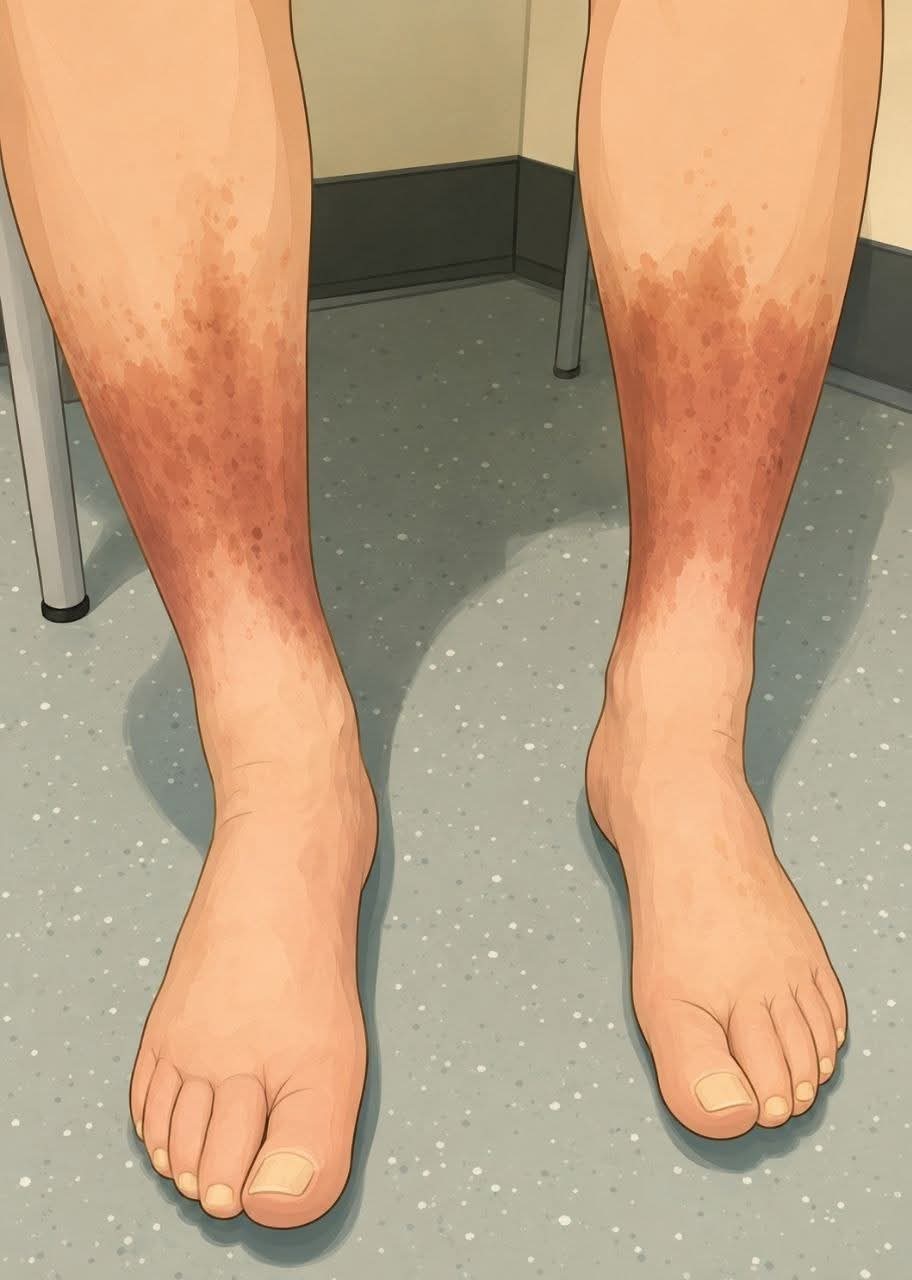
The image shows both lower legs with areas of reddish-brown and darker skin discoloration, particularly around the shins. Changes in skin color on the legs can have many possible explanations, ranging from minor irritation or previous bruising to skin inflammation or circulation-related conditions. An image alone cannot establish the exact cause, so persistent or unexplained changes should be evaluated by a healthcare professional.
Possible Causes
One common explanation is bruising. A bruise occurs when small blood vessels beneath the skin are damaged and blood collects under the skin. Bruises can initially appear reddish or purple and gradually change color as the body breaks down the trapped blood.
Other possibilities include skin irritation or dermatitis, which can cause redness and, when inflammation persists, darker or thickened areas of skin.
Discoloration can also occur with some vein or circulation problems. Venous conditions may be associated with swelling, aching, itching, or darkening of the skin around the lower legs.
When to Seek Medical Attention
It is important to have the skin examined if the discoloration:
- Appears without an obvious injury
- Keeps spreading or becoming darker
- Occurs repeatedly
- Is accompanied by swelling, pain, warmth, or itching
- Is associated with sores that do not heal
- Appears together with significant changes in the color or temperature of the feet
Sudden swelling, pain, and darkening or bluish discoloration in one leg can sometimes be associated with deep vein thrombosis (DVT) and requires prompt medical assessment.
Care and Prevention
Until the cause is known, gentle skin care is advisable. Avoid scratching or aggressively rubbing the affected areas, keep the skin moisturized, and protect the legs from unnecessary injury. If swelling is present, gentle movement and avoiding prolonged sitting or standing may be helpful in some situations.
Avoid using strong bleaching products, steroid creams, or other medicated treatments without professional advice, because the appropriate treatment depends on the underlying cause.
Conclusion
The skin changes visible in the image may represent bruising, inflammation, pigmentation, or another skin or circulation-related problem. The appearance alone is not enough to diagnose the condition. If these marks are new, unexplained, persistent, painful, or worsening, a doctor or dermatologist should examine them and determine whether further testing is necessary.